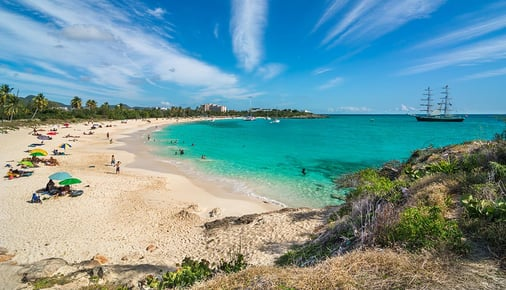
- Travel insurance is not legally required to visit Saint Martin (French side) or Sint Maarten (Dutch side), but it is strongly recommended given the Caribbean hurricane season and the island’s limited advanced medical facilities.
- Comprehensive travel insurance can cover trip cancellations, delays, interruptions, lost baggage, and medical emergencies during your trip.
- Travel medical insurance primarily covers medical situations, with emergency medical evacuation being important for serious cases, which are often transferred to Guadeloupe, Puerto Rico, or the U.S.
- Since the island sits outside the U.S., most U.S. domestic health plans and Medicare will not pay for care there, making a standalone international policy the main safety net for American travelers.
Is Travel Insurance Required for Saint Martin?
No, travel insurance is not mandatory to enter either the French (Saint Martin) or Dutch (Sint Maarten) side of the island. Both sides require only a valid passport and a completed arrival card. However, it is highly recommended given the island’s exposure to Atlantic hurricanes and the fact that the most serious medical cases are often evacuated off-island, at significant cost, to better-equipped facilities.
What Can Travel Insurance Cover for Saint Martin?
Whether you’re beach-hopping between Orient Bay and Maho Beach, watching planes land at Princess Juliana Airport, or exploring the island’s French and Dutch culture, travel insurance can help protect your trip from the unexpected.
Travel insurance comes in two categories: travel medical insurance and comprehensive travel insurance.
Travel Insurance
Travel insurance protects your Saint Martin trip by covering non-refundable expenses like flights, resort stays, and excursions, alongside emergency medical care. If you need to cancel for a covered reason, it reimburses pre-paid costs such as flights and resort deposits. It also covers trip delays and interruptions caused by tropical storms, medical costs from injury or sickness, emergency medical evacuation to a better-equipped island or the mainland U.S., and reimbursement if your baggage is lost or delayed.
Travel Medical Insurance
If you are concerned about medical situations or emergencies during your trip rather than broader trip protections like cancellations, delays, or lost baggage, a travel medical insurance plan is the better fit. Travel medical insurance focuses on health-related emergencies, and is typically less expensive than a comprehensive travel insurance policy. Since the island’s hospitals handle routine care but transfer complex cases elsewhere, a policy with solid evacuation benefits is advisable, covering hospitalization, doctor visits, prescribed medication, and transport to Guadeloupe, Puerto Rico, or the U.S. for advanced treatment.
Best Travel Insurance for U.S. Travelers to Saint Martin
- Best Travel Medical Insurance with High Evacuation Limits: Patriot Platinum
- Best Affordable Travel Medical Insurance: Patriot Plus
- Best Overall Comprehensive Travel Insurance Plan: Pathway Premium
How Much Does Travel Insurance for Saint Martin Cost?
Travel Insurance
Quotes below reflect a two-week trip, with $3,000 in trip costs insured per person.
| Traveler Profile | Average Cost | Price Range |
|---|---|---|
| Solo traveler, 30s | ~$103 | $35–$196 |
| Solo traveler, 50s | ~$143 | $66–$271 |
| Senior solo (65+) | ~$205 | $131–$353 |
Travel Medical Insurance
Quotes below reflect a two-week trip with a $250 deductible and $100,000 in coverage.
| Traveler Profile | Average Cost | Price Range |
|---|---|---|
| Solo traveler, 30s | ~$18 | $10–$30 |
| Solo traveler, 50s | ~$47 | $30–$82 |
| Senior solo (65+) | ~$71 | $26–$124 |
Why Should Travelers Buy Travel Insurance for Saint Martin?
Atlantic Hurricane Season
Saint Martin sits in the heart of the Atlantic hurricane belt (June–November) and has been directly hit by major storms in recent years. Trip cancellation, delay, and interruption coverage can reimburse costs if a storm disrupts your flights or forces an evacuation.
Protecting a High-Cost Investment
Resort stays, sailing charters, and fine dining bookings on the island, split between French and Dutch pricing, often involve significant non-refundable spending. If illness or a family emergency forces a cancellation, trip cancellation coverage protects that investment.
Limited On-Island Medical Capacity
While the island has hospitals on both the French and Dutch sides for routine care, serious medical cases are frequently transferred to Guadeloupe, Puerto Rico, or the U.S. mainland. Travel medical insurance with evacuation benefits helps cover the cost of that transfer.
What Are the Requirements for Traveling to Saint Martin in 2026?
Passport Requirements
U.S. citizens need a valid passport to enter either side of the island, valid for the duration of the stay plus at least three months beyond departure.
Visa Requirements
U.S. citizens do not need a visa to visit Saint Martin or Sint Maarten for tourism or business stays of up to 90 days. All travelers must complete the free Sint Maarten Embarkation/Disembarkation (ED) card online before travel.
Do Americans Need a Visa to Visit Saint Martin?
No. U.S. passport holders can visit either the French or Dutch side visa-free for up to 90 days. The main pre-arrival step is completing the free ED card online. Be cautious of unofficial websites charging fake ‘processing fees’ for this free form.
What to Know Before Your Trip to Saint Martin
- Money: The French side uses the Euro (EUR) and the Dutch side uses the Netherlands Antillean Guilder (ANG), though U.S. dollars are widely accepted on both sides. Credit cards are common in resorts and restaurants.
- Weather: The island is warm year-round, with the Atlantic hurricane season running June through November and the most popular, driest travel months from December through April.
- Culture: Saint Martin/Sint Maarten blends French, Dutch, and Caribbean culture on one small island with no border checkpoint between the two sides. French and Dutch are official languages, though English is widely spoken in tourist areas.
- Crime: The island is generally safe for tourists, especially in resort areas, though standard precautions against petty theft are recommended, as on any populated Caribbean island.
- Transportation: Rental cars, taxis, and resort shuttles are the primary ways to get around. Driving is on the right, and roads connect the French and Dutch sides seamlessly.
- Nature: The island offers over 35 beaches, including Maho Beach, famous for low-flying jets landing at Princess Juliana Airport. Ocean currents can be strong at some beaches, so heed posted warnings.
Travel Resources for Saint Martin
- For U.S. Citizens (Emergencies): Contact the nearest U.S. Embassy or Consulate, or the U.S. Department of State.
- For General Emergencies: Dial 911 on the Dutch side (Sint Maarten) or 112 on the French side (Saint Martin).
- For Arrival Card Registration: Complete the free Saint Martin ED Card.
- For General Information: See the official Saint Martin tourism website.