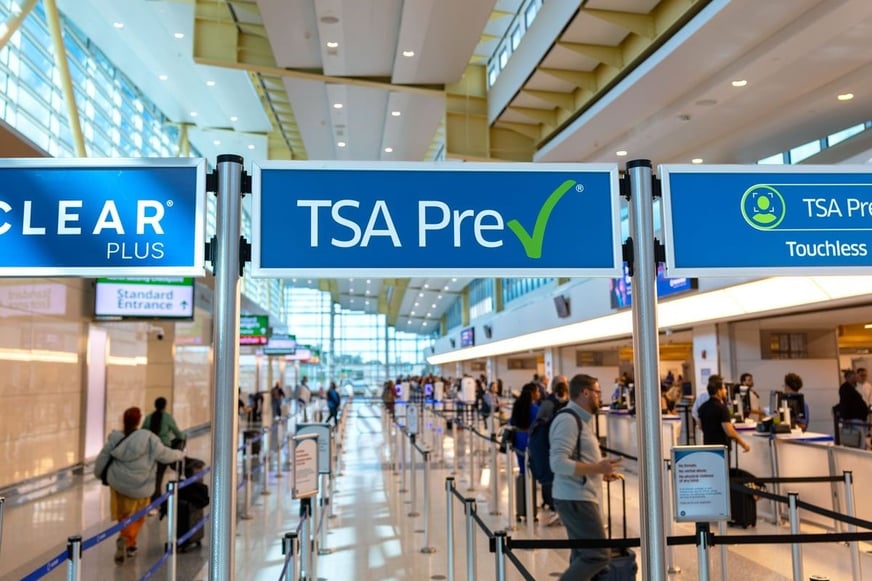
On May 14, 2026, the Transportation Security Administration announced the launch of TSA Gold+.
Given that many travelers are used to the TSA Pre-Check, people are searching to find out whether they need to sign up, pay a fee, or do anything differently at the airport. The short answer is no. The longer answer is worth understanding, especially if you travel regularly.
What This Guide Will Cover
- What TSA Gold+ is and how it works
- Why TSA created it and the financial pressures behind it
- How it’s different from TSA PreCheck and Global Entry
- What changes at the security checkpoint, and what stays the same
- Which airports are involved
- How travel insurance fits into smart trip planning
What Is TSA Gold+?
TSA Gold+ is a new public-private partnership that expands the existing Screening Partnership Program (SPP), which currently uses private contractors for security screening at 20 U.S. airports under TSA’s oversight. TSA Gold+ adds additional responsibility to these private contractors, making them accountable for both staffing and the technology used to screen passengers and baggage. The program aims to leverage private investment to modernize equipment, reduce bottlenecks, and ultimately increase checkpoint efficiency.
One thing to be clear about upfront: TSA Gold+ is not a program for passengers. There’s no application, no fee, and nothing for travelers to enroll in. This is a contract model between TSA and the private companies that operate airport security.
Is TSA Gold+ the Same as TSA PreCheck?
No, TSA PreCheck is a passenger screening program while TSAGold+ is primarily for private contractors.
Your PreCheck status is unaffected by TSA Gold+ regardless of which airport you’re flying through.
How Is TSA Gold+ Different from the Existing Screening Partnership Program?
For TSAPreCheck, you apply, pay $85 for a five-year membership, pass a background check, and in return you get access to dedicated express lanes where you can keep your shoes on, leave your laptop in your bag, and generally move through security faster. It’s a personal enrollment program.
Global Entry works similarly as a separate program through U.S. Customs and Border Protection that speeds up re-entry for international travelers. Neither PreCheck nor Global Entry has any connection to the Gold+ program.
What Actually Changes at the Security Checkpoint?
For most travelers right now, very little is going to change.
Federal security standards still apply, regardless of who operates the checkpoint. Screeners at SPP and Gold+ airports go through the same training as federal TSA officers. The rules you already know, including the 3-1-1 liquids rule, laptop removal, and prohibited items, all remain in place because they come from federal law and TSA policy, not from whoever is staffing the lane.
Over time, if private operators invest in more advanced equipment, travelers could see shorter lines and faster screening. But that’s a longer-term outcome. For your next trip, you can expect the same experience you’re used to.
Which Airports Are Part of TSA Gold+?
No specific airports have been officially confirmed as of May 2026. TSA is still working through the formal contracting process. An internal memo noted that “a handful of airports have expressed strong interest,” but the program hasn’t been publicly deployed at any new locations yet.
The 20 airports already operating under the existing SPP, including San Francisco International (SFO), Kansas City International (MCI), Orlando Sanford International (SFB), Jackson Hole Airport (JAC), and Bozeman Yellowstone International (BZN), form the foundation the Gold+ model builds on.
Does TSA Gold+ Affect International Travelers?
Not directly. TSA handles domestic departure screening. Customs and Border Protection handles re-entry for international arrivals, and that process is separate from TSA Gold+ entirely.
If you’re traveling internationally, the relevant checkpoints on the U.S. side are still the same.
Where Does Travel Insurance Fit Into All of This?
TSA Gold+ won’t cause your trip to be disrupted. But plenty of other things can, and that’s where travel insurance becomes relevant.
Travel insurance is a policy you purchase before a trip that reimburses you for financial losses caused by covered unexpected events. Those include trip cancellations from illness, injury, or a family emergency; emergency medical expenses if you get sick abroad; lost or delayed luggage; and missed connections.
TSA Gold+ is a structural change to how airport security operates. The things that actually create financial exposure on a trip, an emergency hospitalization, a missed connection, a weather-related cancellation, sit in an entirely different category. Travel insurance is what addresses those.
Where Can I Get the Best Travel Insurance For My Trip?
Using a comparison platform, like VisitorsCoverage, allows you to compare and contrast some of the top plans available to find the best plan for your coverage requirements and budget.
If you need help deciding the best plan for you, don’t hesitate to reach out to our team of travel insurance experts who can help match you to the best plan for you.
- TSA Gold+ expands private contracting at airport checkpoints but does not change the federal security rules travelers already follow
- It’s not a passenger program. No enrollment, no fees, nothing to sign up for
- Your TSA PreCheck and Global Entry status are completely unaffected
- No specific airport participants have been confirmed yet
- Travel insurance can cover travel mishaps like cancellations, medical emergencies abroad, and missed connections