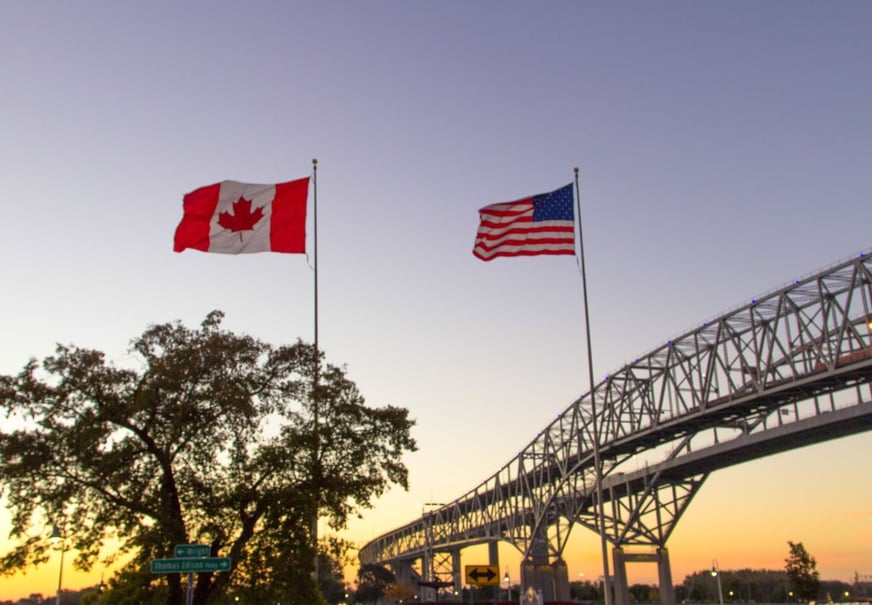
Whether you are on a road trip to Seattle for a weekend, flying to Florida for the winter, or going on an Alaskan cruise, crossing the Canada-US border looks different in 2026. Here’s what to expect at every type of crossing, and how you can prepare for your next trip to the United States.
- Beyond your passport, have your itinerary and proof of Canadian residency ready. Be prepared to answer questions about your length of stay and intent to return.
- While passports are standard, travelers by land or sea can also utilize a NEXUS card, a Secure Certificate of Indian Status (SCIS), or an enhanced driver’s license (EDL) from approved provinces.
- Specialized plans like CoverAmerica-Gold can facilitate smoother entry and provide 24/7 assistance to find medical providers within a designated PPO network.
What Essential Documents Should Canadians Have When Crossing the Canada-US Border?
Regardless of how you are traveling to the United States, in general, travelers should have the following with them when crossing the border:
- Valid passport up until the date of your intended departure from the United States
- Proof of return/ties to Canada, such as a return ticket, proof of employment, or family ties
- Travel itinerary, such as hotel and rental car reservations
- Proof of the purpose of the trip, whether it is for business travel, vacations, etc.
While requirements can differ for visitors on a visa versus those who are traveling for a short period of time, travelers must be prepared to answer questions about their destination, length of stay, and accommodations to demonstrate their intent to return to Canada.
Documents Required for Canadians Traveling by Air
Canadian citizens travelling by air to the United States either need a passport or a valid NEXUS card to enter the United States. This applies to all Canadian citizens, including children, who are flying to the United States or simply passing through on a layover.
Documents Required for Canadians Traveling by Land or Sea
Travelers aged 16 and above are required to provide one of the following: a valid passport or NEXUS card, a Trusted Traveler Program card, or a Secure Certificate of Indian Status (SCIS). Travelers can also use an enhanced driver’s license (EDL) or an enhanced identification card (EIC) issued by a province or territory that has established a U.S.-approved EDL/EIC program.
What Common Concerns do Canadians Have About Crossing the Border?
Beyond the required documents, many Canadian travelers have genuine concerns about the “what-if” scenarios and what could happen at the border. Here are the common concerns Canadian travelers may face, and what they can do to protect themselves.
Canada-US Border Entry Rejections
While it does not happen often, many travelers are concerned about what happens if they are denied entry into the United States, especially when traveling by air. Common reasons for a border entry denial include a criminal record, a previous overstay, or inconsistent answers during questioning.
Keep in mind that many Canadian airports have preclearance checkpoints before your trip to the United States. If denied entry, you may apply directly to U.S. Customs and Border Protection for a temporary waiver of inadmissibility via the nearest U.S. embassy or consulate. It is also recommended to consult with a US immigration lawyer before attempting to re-enter.
Secondary Inspection and Missed Connections
If you are sent to secondary inspection by U.S. Customs and Border Protection at the airport, it can cause missed connections, as the process can take several hours. While some airlines may have the ability to rebook you to the next flight, it is not guaranteed, and you may have to be prepared to get a new flight or pay a change fee.
The Unexpected Medical Costs While in the USA
Once you are in the United States, a primary worry for many Canadians is the financial impact of experiencing a medical emergency in the United States. A visit to a US emergency room for something as common as a heart attack, broken bone, or appendicitis can cost CAD $50,000 to $250,000 or more. Provincial health plans cover only a fraction of these costs, if anything at all.
Do I Need Travel Insurance to Enter the USA?
While not legally required, there are some rumors circulating of travelers who were able to make their US entry process smoother because they had proof of travel insurance for the US.
Regardless of the legal requirements, travel insurance is strongly recommended for Canadians traveling to the USA for the following reasons:
- US healthcare costs are extraordinarily high (a simple ER visit can exceed $2,000)
- Having insurance allows you to seek medical care with more financial confidence
- Many travel insurance plans provide valuable 24/7 assistance services to help find medical facilities in the USA within your plan’s PPO network
- Trip interruption coverage included in some visitors insurance plans can help safeguard your travel-related financial obligations.
Best Visitors Insurance with Border Entry Protection: CoverAmerica-Gold
Best Travel Insurance for Seniors with Pre-Existing Conditions: INF Elite X
Best Travel Medical Insurance with High Medical Coverage Limits: Atlas America Premium
If you are a Canadian, consider getting travel insurance for your next U.S. trip with VisitorsCoverage. If you have questions or hesitations, our team of licensed insurance experts is here to guide you through the whole process and even help you find a plan that fits your needs and budget as a Canadian.