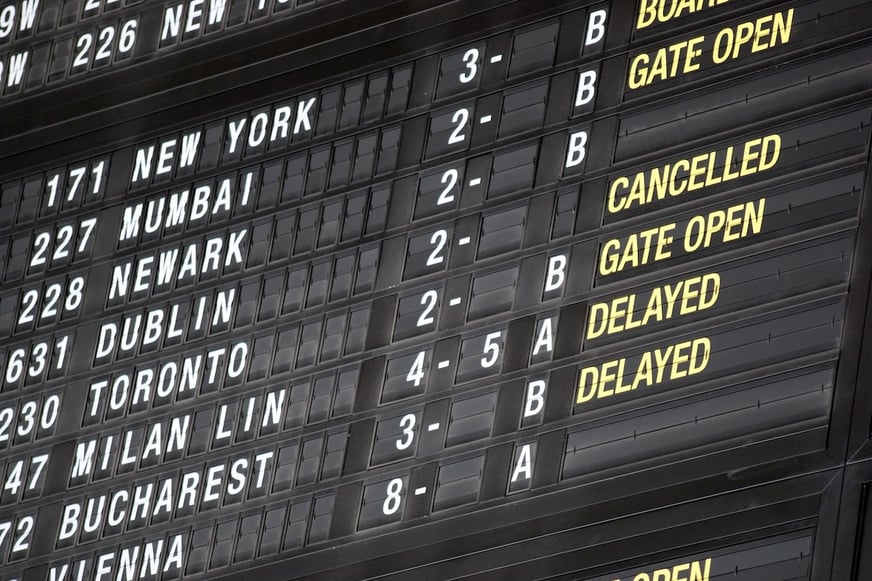
Starting October 19, 2026, a new rule from the U.S. Department of Transportation (DOT) lets airlines treat 10 specific causes of delays and cancellations as outside the airline’s responsibility, which can change how travelers are compensated during a major flight delay.
If one of these delays disrupts your trip, you may be left paying for your own hotel, meals, and rebooking. Travel insurance for flight delays is designed to fill that gap, reimbursing covered expenses like these during a significant delay, no matter who’s at fault.
What Flight Disruptions are Excluded Under the New DOT Rule?
The new DOT rule makes 10 specific situations, like unscheduled maintenance, medical emergencies onboard, and airport closures due to volcanic ash or wind, out of the category of delays that are the airline’s responsibility.
Below is the full list of the 10 air travel situations that will no longer be considered within the airline’s control:
- Aircraft cleaning due to the death of a passenger
- Damage to the airplane due to extreme weather, debris, or sabotage
- Baggage or cargo loading delays from a bag-system outage the airline doesn’t control
- Cyberattacks, as long as the airline meets cybersecurity regulations
- An unexpected government system shutdown or failure that affects safe flying
- Overheated brakes due to an emergency
- Unscheduled maintenance that needs to happen for the plane to take off
- A medical emergency onboard that isn’t the airline’s fault
- The removal of an unruly passenger
- Airport closure due to volcanic ash, wind, or wind shear
When a delay falls into one of these categories, travel insurance for flight delays could help cover additional expenses like meals and hotels for covered reasons, filling the gap in support from your airline.
Why This Makes Travel Insurance for Flight Delays More Critical
With the new DOT rule, travel insurance emerges as an even more valuable tool for protecting travel investments and managing unexpected disruptions. Unlike airline policies, which vary by carrier and situation, travel insurance provides consistent, predetermined coverage based on the plan you choose.
Travel Delay Coverage
One of the most relevant benefits given the new DOT rule is travel delay coverage. This protection typically provides reimbursement for additional expenses incurred during extended delays, such as:
- Hotel accommodations
- Meals and refreshments
- Alternative transportation
- Essential personal items
These are exactly the costs airlines may no longer cover for the 10 excluded situations, making travel insurance an important alternative source of protection.
Trip Cancellation and Interruption Protection
Travel insurance can also protect travelers in the event of a trip cancellation or interruption, reimbursing travelers for non-refundable expenses when trips are canceled or cut short for covered reasons. These may include:
- Medical emergencies before or during travel
- Severe weather events affecting destinations
- Unexpected work requirements
- Family emergencies
- Travel delays causing missed connections
Without guaranteed airline compensation, this coverage becomes especially valuable for recouping costs that would otherwise be lost entirely.ns. Unlike airline policies, which vary by carrier and situation, travel insurance provides consistent, predetermined coverage based on the specific plan chosen.
Beyond Flight Disruptions: Comprehensive Protection
While the headline news focuses on flight compensation, travel insurance offers protection that extends far beyond air travel disruptions. This broader coverage is increasingly important as travelers face multiple layers of uncertainty.
Medical Coverage Away from Home
Perhaps the most critical component of travel insurance is coverage for unexpected medical emergencies during trips. This protection can include:
- Emergency medical treatment
- Hospital stays
- Medical evacuation if necessary
- Medical repatriation to bring you home for continued care
- Coverage for pre-existing conditions with certain plans and timing requirements
These benefits operate completely independently from airline policies and provide financial protection against potentially catastrophic medical expenses, especially when traveling internationally.
Baggage Protection
Lost, damaged, or delayed baggage represents another travel risk that quality insurance can address:
- Reimbursement for lost or damaged personal items
- Coverage for essential purchases when baggage is delayed
- Protection that goes beyond the minimal coverage airlines typically provide
24/7 Travel Assistance
Many travel insurance plans include access to 24/7 assistance services that can help travelers navigate disruptions in real-time:
- Help finding alternative transportation
- Assistance locating accommodations during delays
- Medical referrals in unfamiliar locations
- Language translation services
- Emergency travel arrangement assistance
This support system can prove invaluable when travel plans are disrupted, regardless of whether airlines are required to provide compensation.
Real-World Scenarios: How Compensation Rules and Insurance Interact
To fully understand the implications of the new DOT rule, consider how these scenarios play out with and without travel insurance:
Scenario 1: Unscheduled Maintenance Leading to a Missed Connection
Under the new rule, airlines may no longer treat this delay as within their control, so hotel and meal compensation may not apply. With travel insurance for flight delays, you could receive reimbursement for hotels, meals, and essential items. If you miss a non-refundable prepaid activity or accommodation, trip interruption benefits might cover these losses as well.
Scenario 2: Airport Closure During Peak Travel Season
Under the new rule, you’d likely be rebooked on the next available flight if the airport is closed due to volcanic ash or severe wind, which, during peak seasons, might be days later. You would be responsible for any additional expenses while you wait for the next available flight.
With travel insurance, you could receive compensation for reasonable additional expenses during the delay. If the delay extends beyond 24-48 hours, some policies might even allow you to cancel the trip entirely and recoup prepaid non-refundable expenses.
Take Control of Your Travel Security with Travel Insurance
The new Department of Transportation rule serves as an important reminder that travelers must ultimately take responsibility for protecting their own journeys. Rather than relying solely on regulation or airline goodwill, travelers can create their own safety net through appropriate travel insurance coverage.
By understanding available options and selecting policies that address their specific needs and concerns, travelers can move forward with confidence despite the changing regulatory environment.